


Menu
Just outside Berlin, in the municipality of Schönefeld, Germany’s largest agri-PV project combines crop farming with organic agriculture, renewable energy production, biodiversity conservation, and accompanying scientific research all on a single site.
The project demonstrates that solar energy and agriculture can coexist on the same land. 74,064 solar modules generate green electricity for approximately 16,500 households. Thanks to the tracking modules and particularly wide row spacing, the spaces between the modules remain usable for agriculture—tractors and combine harvesters can still be used.
At least 90 percent of the approximately 76 hectares will remain suitable for agricultural use in accordance with DIN SPEC 91434 and will also be protected against climate change. The land is managed in cooperation with a local organic farm in Brandenburg. The remaining areas provide ecological benefits for flora and fauna and offer space for compensation, replacement, and privacy screening measures.
Bifacial modules mounted on single-axis 2P trackers track the sun. Installed several meters above the ground, they deliver higher energy yields—especially during the early morning and late afternoon hours—and allow for wider working widths between the rows.
The rows are spaced about 11 meters apart and run north-south. This results in an effective working width of about 9 meters. A battery storage system is planned as a future expansion.
Wildflower strips and field hedgerows—the goal is to have them make up 10% of the area—create habitats for birds and insects. Perches, nesting boxes, and insect banks are also included; the fenced-in area serves as a refuge for flora and fauna.
Throughout the project’s 30-year duration, only organic fertilizers and organic pest control methods will be used. This promotes humus formation and CO₂ sequestration in the soil. After the guaranteed decommissioning, the farmer will regain land of higher ecological quality.
The system is being scientifically monitored as part of the R&D project “Investigation and Evaluation of Agri-PV Systems” by TU Dresden, Bosch & Partner, the Professor Hellriegel Institute e. V., and Fraunhofer ISE. Schönefeld is one of six case studies.
From 2025 to 2027, vegetation, birds, insects, reptiles, and small and medium-sized mammals will be surveyed, along with the landscape and microclimate. The goal is to develop recommendations for the nature-friendly design of agri-PV systems.
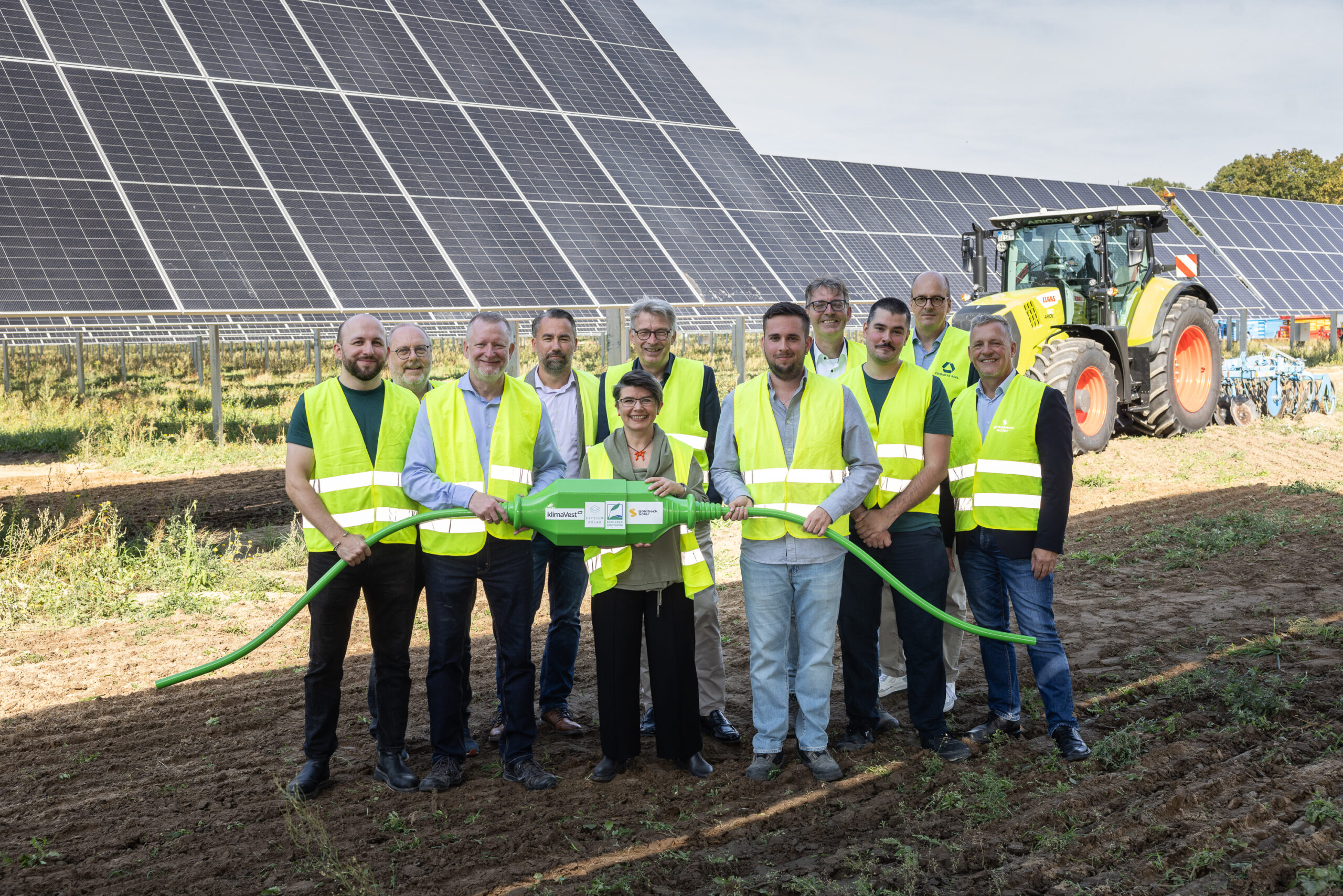 © Ines Photography Berlin
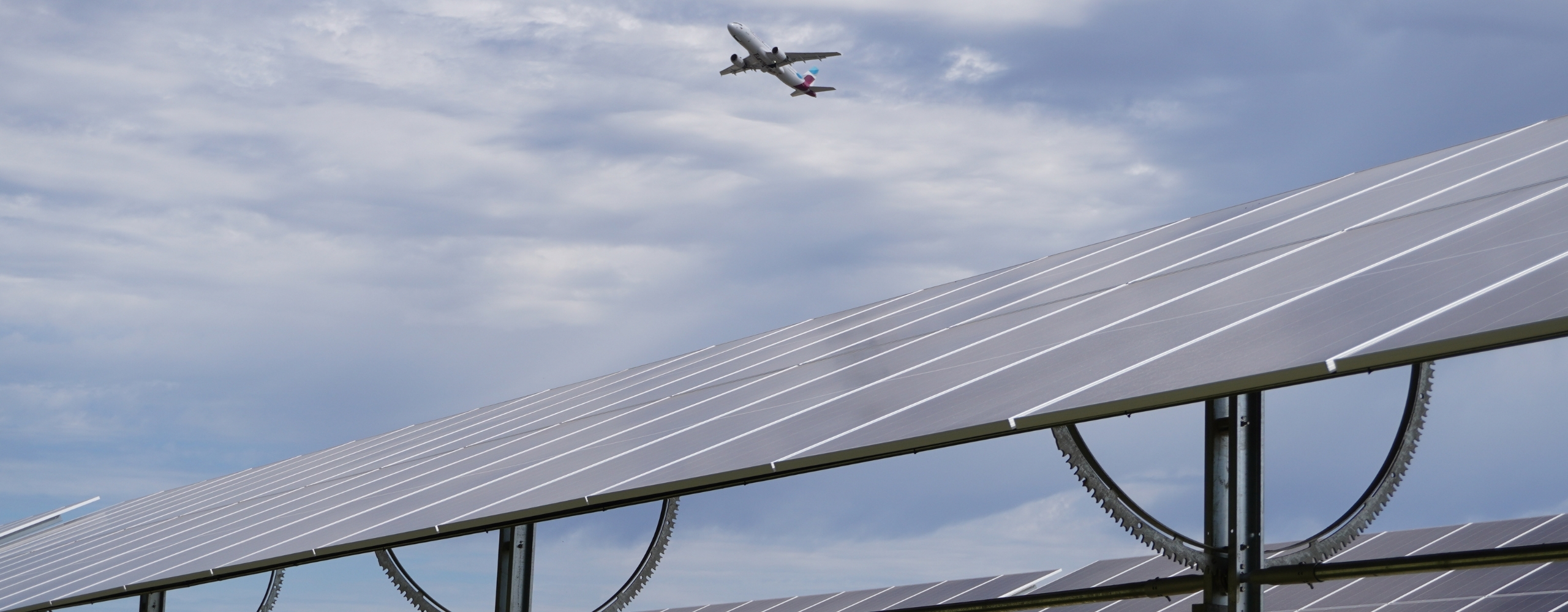 © GOLDBECK SOLAR
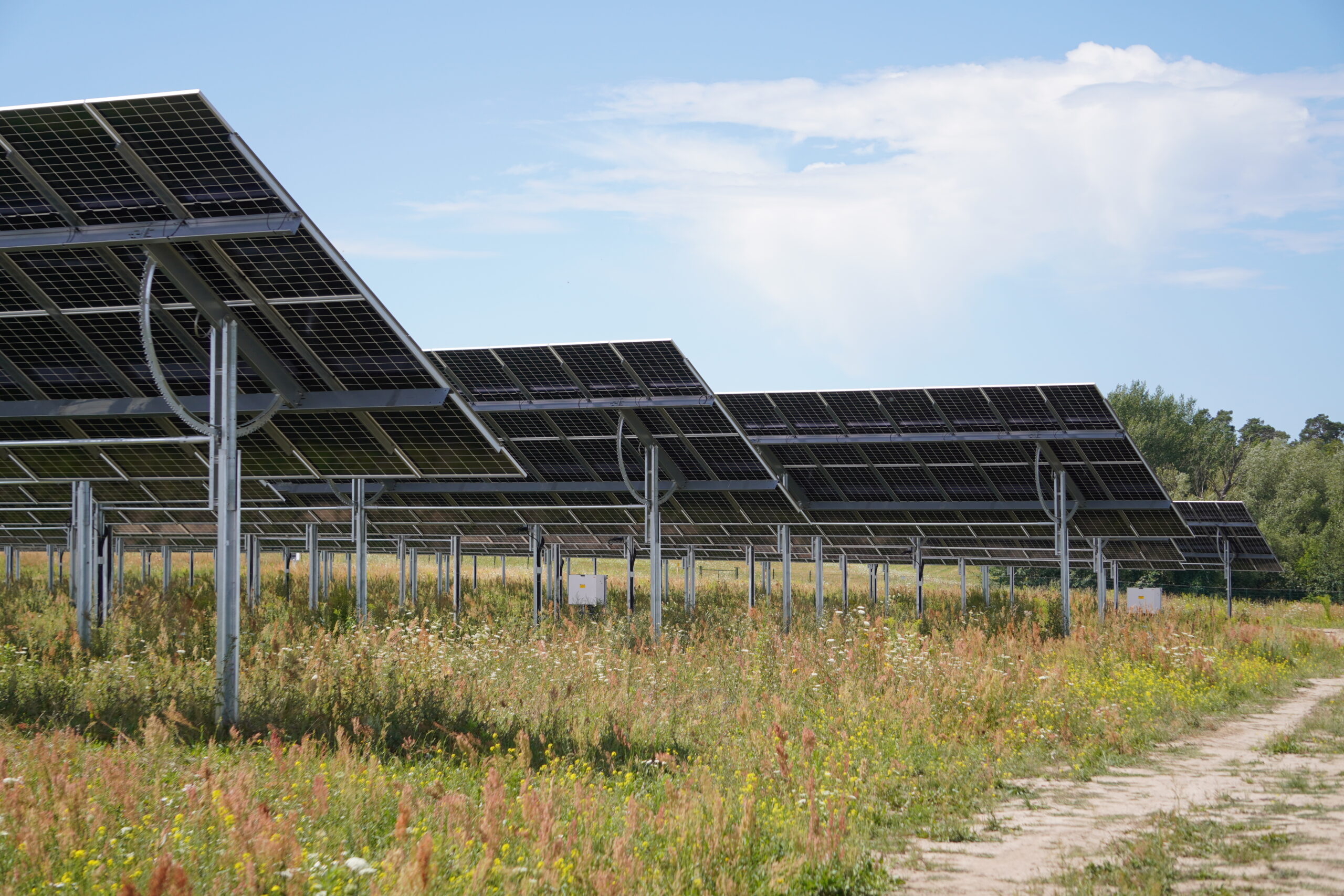 © GOLDBECK SOLAR
We need innovative solutions to address the consequences of climate change. It will be nearly impossible to continue business as usual on Brandenburg’s land in the future.
Sven Geelhaar, organic farmer

